


Next: Isolated SWCNT Up: SWCNTs and Carbon foams Previous: SWCNTs and Carbon foams Contents
 ) respectively
 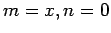 and
and  (where
  is integer).
The calculations have been carried out in periodic boundary conditions according to the methodology explained in Chapter 1.
Structures possessing
is integer).
The calculations have been carried out in periodic boundary conditions according to the methodology explained in Chapter 1.
Structures possessing  0 or
0 or  have not been considered in the calculations since this would lead to a large simulation cells.
The C
have not been considered in the calculations since this would lead to a large simulation cells.
The C C bond length has been chosen to be
  =1.421 Å, as it is accepted in the literature[57] for the carboncarbon distance in graphite.
In order to calculate the physisorption properties of the inner and outer tube surfaces, the primitive unit cells of the nanotubes have been repeated in two ways:
=1.421 Å, as it is accepted in the literature[57] for the carboncarbon distance in graphite.
In order to calculate the physisorption properties of the inner and outer tube surfaces, the primitive unit cells of the nanotubes have been repeated in two ways:
 (along the axis of the tube) parameter of the unit cell, and sites (
 and
and  parameters) equal to the diameter of the nanotubes.
In the second case the unit cell consists of two single nanotube primitive cells, so that repeated in and directions they create hexagonal arrangement of nanotubes (infinite bundle of nanotubes).
The distance between the nanotubes in a bundle is defined as
parameters) equal to the diameter of the nanotubes.
In the second case the unit cell consists of two single nanotube primitive cells, so that repeated in and directions they create hexagonal arrangement of nanotubes (infinite bundle of nanotubes).
The distance between the nanotubes in a bundle is defined as 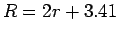 Å where
  is the distance between the tube axes and
  is the nanotube radius.
In both cases the potential in the box has been contributed from the 15 nearest unit cells along the tube axis, both backwards and forewards.
For the zigzag structures (
is the nanotube radius.
In both cases the potential in the box has been contributed from the 15 nearest unit cells along the tube axis, both backwards and forewards.
For the zigzag structures (
 and = 4.26 Å) the unit cells were chosen to correspond to the primitive cell of the nanotubes.
In order to avoid the quantum confinement effects, because of the small lattice vector in direction ( = 2.46 Å), the unit cell of the armchair modification () consists of two primitive cells repeated in the direction.
Since the atoms on the walls are not laying in one plane, especially for tubes with very small diameter, the radius is taken as a mean distance between the axis and the atoms on the tube wall.
Although, the geometrical parameters of the bundles and the nanotubes themself are close to the experimental values, it is worth to mention that they do not pretend to be very accurate.
Instead, the models are build so that they demonstrate the general trends in the hydrogen storage capacities of these structures with respect to their geometrical properties.
and = 4.26 Å) the unit cells were chosen to correspond to the primitive cell of the nanotubes.
In order to avoid the quantum confinement effects, because of the small lattice vector in direction ( = 2.46 Å), the unit cell of the armchair modification () consists of two primitive cells repeated in the direction.
Since the atoms on the walls are not laying in one plane, especially for tubes with very small diameter, the radius is taken as a mean distance between the axis and the atoms on the tube wall.
Although, the geometrical parameters of the bundles and the nanotubes themself are close to the experimental values, it is worth to mention that they do not pretend to be very accurate.
Instead, the models are build so that they demonstrate the general trends in the hydrogen storage capacities of these structures with respect to their geometrical properties.