


Next: Bibliography Up: working title: Carbon materials Previous: Cfullerites Contents
 carbon physisorption is confirmed by both experimental and theoretical works, the quantitative H2 physisorption is a basis for contradictory in the literature.
Thus, the hereby presented investigation aims to give an explanation of the contradictory results.
carbon physisorption is confirmed by both experimental and theoretical works, the quantitative H2 physisorption is a basis for contradictory in the literature.
Thus, the hereby presented investigation aims to give an explanation of the contradictory results.
To achieve these goals a multi-stage method is applied to investigate the H -host system and its properties.
Since high accuracy is required, the H interactions with the host system are modeled as an additive Buckingham potential, with parameters fitted to high-level ab initio calculations (MP2, CCSD(T)).
Then, the stationary Schrödinger equation is evaluated on a numerical grid for a shapeless particle.
The particle has the mass of a hydrogen molecule and interacts with the periodic potential of the host structure.
Thus, the internal degrees of freedom of the hydrogen molecule and the H2H2 interactions are neglected.
The result is a spectrum of energies
-host system and its properties.
Since high accuracy is required, the H interactions with the host system are modeled as an additive Buckingham potential, with parameters fitted to high-level ab initio calculations (MP2, CCSD(T)).
Then, the stationary Schrödinger equation is evaluated on a numerical grid for a shapeless particle.
The particle has the mass of a hydrogen molecule and interacts with the periodic potential of the host structure.
Thus, the internal degrees of freedom of the hydrogen molecule and the H2H2 interactions are neglected.
The result is a spectrum of energies  with corresponding eigenstates
  , interpreted as all possible thermodynamic states of the guest molecule inside the host structure.
This is equivalent to the ideal gas approximation.
The thermodynamical functions of the gas state are calculated using standard statistical thermodynamic expressions.
As a last stage the storage capacities (volumetric and gravimetric) are calculated by including the neglected H
, interpreted as all possible thermodynamic states of the guest molecule inside the host structure.
This is equivalent to the ideal gas approximation.
The thermodynamical functions of the gas state are calculated using standard statistical thermodynamic expressions.
As a last stage the storage capacities (volumetric and gravimetric) are calculated by including the neglected H H interactions, using the experimental equation of state (EES) [36].
The pressure used in EES
H interactions, using the experimental equation of state (EES) [36].
The pressure used in EES  is calculated as
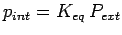 , where
  is the pressure outside the material and
  is the equilibrium constant.
The EES gives the density of H into material, and the gravimetric capacity is the ratio between the
the hydrogen and the carbon densities.
is the equilibrium constant.
The EES gives the density of H into material, and the gravimetric capacity is the ratio between the
the hydrogen and the carbon densities.
Different classes of carbon materials has been discussed in the context of their H2 storage abilities (gravimetric and volumetric).
The models include experimentally detected (real) allotropes of carbon as well as hypothetical structures.
The systems included in this investigation cover materials like a planar graphitic monolayer, bilayers, nanotubes and experimentally determined C60intercalated between graphene layers.
Hypothetical materials like carbon foams and graphite with different interlayer distances are considered as well.
Although the variety of possible pure carbon structures is far too big, the materials mentioned above possess the main structural characteristics which underline the diversity among carbon structures.
For example single walled carbon nanotubes have bent surfaces where the curvatures vary depending on the radius of the tube.
In nanotube bundles even additional absorption sites appear.
This investigation shows that the H2 absorption abilities of the materials depend strongly on the nano-scale structure.
This includes size and shape of the pores and the channels which exist in a bulk carbon material.
It was found that even small deviations from the optimal characteristics of these cavities may lead to a collapse in the hydrogen storage capability of the material.
Thus, tiny differences in the synthesis techniques and post-treatment methods may evidently influence the hydrogen-storage behaviour of any material.
Therefore, a control on the nano-scale structural characteristics of the system is required in order to have reproducible experimental result.
The optimal cavity width suggested by these simulations is in the range of 7-14 Å.
Smaller values prevent hydrogen absorption, whereas larger values lead to slight increase of the hydrogen density inside the material.
In other words, it has been found that the storage capacity is intimately controlled by the pore size and its topology.
This study shows that variations in the pore width influence considerably the interaction free energy ( ), while changes in the pore
shape do not.
On the other hand, concave surfaces may considerably increase the abundance of the hydrogen gas, though the interaction free energy does not significantly differ.
In other words, in order to design carbon materials with high storage capacity, a compromise has to be done between size and shape of the cavities.
), while changes in the pore
shape do not.
On the other hand, concave surfaces may considerably increase the abundance of the hydrogen gas, though the interaction free energy does not significantly differ.
In other words, in order to design carbon materials with high storage capacity, a compromise has to be done between size and shape of the cavities.
Simulations at ambient conditions (300 K, 0.1 MPa) suggest that the upper gravimetric capacity for carbon materials is less than 1 %. In this work, the highest gravimetric capacities (0.7 %) for ambient conditions are found for infinitely large bundles of nanotubes. However, consideration of the boundary effects may lead to a significant decrease in the storage capacity.
Although the storage capacity is very low, it demonstrates that carbon materials can act as ``nano-pump'' and effectively increase the H2 density in the bulk.
Therefore, they can be used as part of the H2 storage devices to additionally increase the pressure inside the container.
The simulations predict that, for higher pressure (300 K, 10 MPa) the gravimetric and volumetric capacities can be driven to respectively 4 mass % and 0.06 g H2 l .
Lower, but technologically acceptable, temperatures at the same pressure suggest even higher gravimetric (Gwt [%]) and volumetric (V [g H2 l]) capacities.
The simulations at 250 K and 10 MPa for CIG, bundle SWCNT and carbon foams suggest Gwt
.
Lower, but technologically acceptable, temperatures at the same pressure suggest even higher gravimetric (Gwt [%]) and volumetric (V [g H2 l]) capacities.
The simulations at 250 K and 10 MPa for CIG, bundle SWCNT and carbon foams suggest Gwt 6 and V0.08.
(see respectively Fig. 4.3, 5.7 and 5.12)
At the same time, the pronounced maxima in H volumetric capacities are expected to be overestimated
The error bar introduced within these simulation is estimated to be about
6 and V0.08.
(see respectively Fig. 4.3, 5.7 and 5.12)
At the same time, the pronounced maxima in H volumetric capacities are expected to be overestimated
The error bar introduced within these simulation is estimated to be about  25 %.
Despite the large margin of the error, the trends indicate that volumetric and gravimetric targets aimed by the FCVT Project[4] can be reachable.
A prerequisite however, is the optimisation of the bulk cavities of the material.
It is not sufficient to provide carbon material with optimal structural properties, as there might be better adsorbats than H2.
The likely contaminant gases (N2, O2, CO2) are more polarisable than H2, and bind much stronger to the nanostructure.
For the most abundant atmospheric gas, N2, the binding energy is estimated of
25 %.
Despite the large margin of the error, the trends indicate that volumetric and gravimetric targets aimed by the FCVT Project[4] can be reachable.
A prerequisite however, is the optimisation of the bulk cavities of the material.
It is not sufficient to provide carbon material with optimal structural properties, as there might be better adsorbats than H2.
The likely contaminant gases (N2, O2, CO2) are more polarisable than H2, and bind much stronger to the nanostructure.
For the most abundant atmospheric gas, N2, the binding energy is estimated of  16 kJ
16 kJ mol[72].
Therefore, the optimal storage material design should not only maximise the H2 abundance, but also be resistant to ``poisoning'' by other molecules.
mol[72].
Therefore, the optimal storage material design should not only maximise the H2 abundance, but also be resistant to ``poisoning'' by other molecules.
1
Lyuben Zhechkov 2007-09-04