Next: Real gas physisorption Up: Physisorption on graphene Previous: Physisorption on graphene Contents
 C (
C ( =1.421 Å) distance[57].
Contributions to the potential from 30 nearest primitive unit cells are included along the in-plane
=1.421 Å) distance[57].
Contributions to the potential from 30 nearest primitive unit cells are included along the in-plane  and
and  directions of a graphene sheet.
For the double-layer structures, the potential of only two layers (``above'' and ``below'' the H2) is included.
For short inter-layer separations, attraction due to the second-neighbour layer may further increase interaction energies.
Nonetheless, this effect was not considered in the simulations for reasons explaned in Chapter 1.
The resulting potential of the two-dimensionally periodic doublelayered graphene model is illustrated in Fig. 3.1.
directions of a graphene sheet.
For the double-layer structures, the potential of only two layers (``above'' and ``below'' the H2) is included.
For short inter-layer separations, attraction due to the second-neighbour layer may further increase interaction energies.
Nonetheless, this effect was not considered in the simulations for reasons explaned in Chapter 1.
The resulting potential of the two-dimensionally periodic doublelayered graphene model is illustrated in Fig. 3.1.
 and
and  (see Eq. 1.2)
are obtained from the energy levels
(see Eq. 1.2)
are obtained from the energy levels  , determined by solving the stationary one-particle Schrödinger equation for H2 motion in the adsorbing potential () and in free space ().
The thermodynamic functions (e.g.
, determined by solving the stationary one-particle Schrödinger equation for H2 motion in the adsorbing potential () and in free space ().
The thermodynamic functions (e.g.  E, S, F) may be obtained using standard expressions[35,58].
The time-independent Schrödinger equation is solved for a single featureless particle with the mass of a hydrogen molecule.
These calculations employ periodic boundary conditions and a plane wave basis set.
In order to accelerate convergence of the free energies with the plane wave cutoff, identical unit cell dimensions and plane wave cutoffs are used for calculation of and .
E, S, F) may be obtained using standard expressions[35,58].
The time-independent Schrödinger equation is solved for a single featureless particle with the mass of a hydrogen molecule.
These calculations employ periodic boundary conditions and a plane wave basis set.
In order to accelerate convergence of the free energies with the plane wave cutoff, identical unit cell dimensions and plane wave cutoffs are used for calculation of and .
The rectangular unit cell is obtained by replicating the primitive unit cell (
 ,
,  ,
,  1.421 Å) in and directions.
However, to avoid the attractive artifacts of the
1.421 Å) in and directions.
However, to avoid the attractive artifacts of the  potential close to the nuclei and reduce the requirements for high-frequency basis set components, the simulation cell extent in the
  directionfor this particular series of structures (see section 1.1.1) was truncated by
  (1.0
(1.0  2.0 Å) in the vicinity of the graphene sheet(s).
For double-layer structures with interlayer spacing
2.0 Å) in the vicinity of the graphene sheet(s).
For double-layer structures with interlayer spacing  , the unit cell extent in the
direction is, therefore,
, the unit cell extent in the
direction is, therefore,
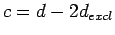 . Single-layer simulations were
performed by using the same periodic boundary conditions, but the
interlayer spacing was chosen to be large. The unit cell parameters,
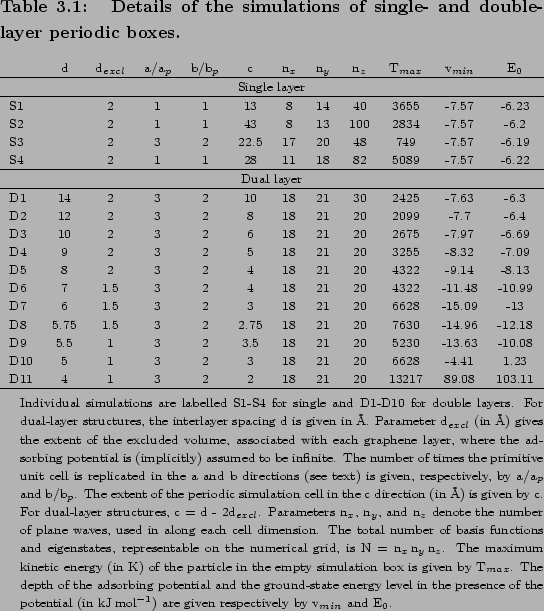
together with the plane wave cutoffs, are given in Table 3.1.
. Single-layer simulations were
performed by using the same periodic boundary conditions, but the
interlayer spacing was chosen to be large. The unit cell parameters,
together with the plane wave cutoffs, are given in Table 3.1.
benzene complex.
Because of the stiffness of the H2 molecule, only the change in the zero-point energy can contribute at temperatures of interest.
At the  minimum of the H2benzene PES, the calculated H2 harmonic vibrational frequency is of 4,494 cm
 , 30 cm below the free H2 molecule.
Indeed, the softening of the H2 vibrational mode appears to be a general trend upon physisorption of this molecule as demonstrated elsewhere in ref. Patchkovskii2003.
However, at 200 K, the (neglected) increase in the adsorption constant is
, 30 cm below the free H2 molecule.
Indeed, the softening of the H2 vibrational mode appears to be a general trend upon physisorption of this molecule as demonstrated elsewhere in ref. Patchkovskii2003.
However, at 200 K, the (neglected) increase in the adsorption constant is
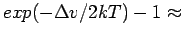 11 %, often leading to a slight underestimation of the storage capacity.
On the other hand, the assessment of the rotational contribution to the partition function requires knowledge of the anisotropy of the adsorption
potential.
For the minimum of the H2-benzene PES, the MP2/cc-pVTZ binding energy is -395 cm. Binding energies of -261 cm are found for the corresponding  -symmetric structures with H2 perpendicular to any of the benzene
  symmetry
planes.
Due to the large rotational level spacing of the H2 molecule (
symmetry
planes.
Due to the large rotational level spacing of the H2 molecule ( 122 cm) and the effects of the nuclear spin statistics, the explicit treatment of the restricted rotation in this potential leads to a small (
 3 %; see section 1.1.4) increase in the adsorption constants, neglected in the calculations.
Dispersive interactions between the graphene layers were not explicitly considered in these simulations as this approach is equivalent to assume that the layered host structure remains unchanged upon H2 uptake. Because of the significant free energy cost, associated with the graphene layer separation process (see ref. graphtherm and section 4.1), the ``empty'' layered structure must be stabilised by other means, such as spacers (see ref. Deng2004 and next chapter for examples).
Meaningful calculations of the free energy changes require that
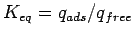 is converged with respect to the volume of the unit
cell.
From test calculations on the single-layer graphene structure, it is found that unit cell
is converged with respect to the volume of the unit
cell.
From test calculations on the single-layer graphene structure, it is found that unit cell  ,
,  leads to
  values converged to better than 15 %, therefore all calculations related to graphene sheets use these unit cell dimensions.
Because tunnelling of H2 through the graphene layer is associated with a very high barrier, there is no need to consider unit cells replication in the direction.
values converged to better than 15 %, therefore all calculations related to graphene sheets use these unit cell dimensions.
Because tunnelling of H2 through the graphene layer is associated with a very high barrier, there is no need to consider unit cells replication in the direction.